Single-Ply Membrane Roofing: PVC and TPO
Flat and low-slope roofs need a different approach than steep-slope shingle systems. Water does not shed quickly from these surfaces, so the roofing material must form a continuous, watertight barrier that stands up to standing water, ponding, and constant exposure. PVC (polyvinyl chloride) and TPO (thermoplastic polyolefin) are two single-ply membrane systems that do exactly that, and both are central to the work we do at Royal Bear Roofing for residential and light commercial properties across the greater Seattle area.
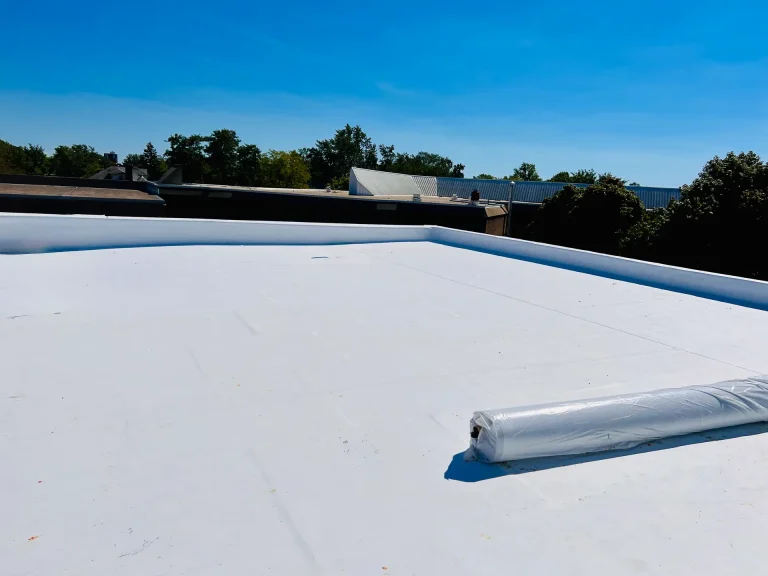
Single-ply membranes come in large rolls that are rolled out across the roof deck and joined together with heat-welded seams. Unlike adhesives or tapes, a heat weld fuses the membrane sheets into a single monolithic surface. This is one of the main reasons PVC and TPO have become so popular for flat roofs. When installed correctly, the seams are often stronger than the membrane itself, and the finished roof resists leaks for decades.
The Difference Between PVC and TPO
PVC and TPO look similar once they are installed, but they are chemically different and suited to slightly different situations. PVC is a mature material with a long track record, highly resistant to chemicals, grease, and fire. It performs extremely well on roofs that are exposed to restaurant exhaust, oils, or industrial byproducts. PVC stays flexible over time and holds its weld integrity, which makes it a reliable long-term choice for demanding environments.
TPO is a newer material that combines many of the strengths of PVC with excellent resistance to ultraviolet light and heat. Its highly reflective white surface bounces sunlight away from the building, which can lower cooling costs during warm months. TPO is also typically more cost-effective than PVC while still delivering strong seam strength and puncture resistance. When we help a property owner choose between the two, we weigh the building use, exposure conditions, budget, and long-term goals. Our team at Royal Bear Roofing walks you through these differences so the decision is clear and well-informed.
Why These Systems Work Well in the Pacific Northwest
The constant rain, moss growth, and gray skies of the region put flat roofs under steady stress. Standing water is the enemy of any low-slope roof, and a membrane that is not fully sealed will eventually fail at the seams. Both PVC and TPO are built to handle persistent moisture, and their welded seams keep water out even during the long wet stretches that define our climate.
Reflectivity matters here too. While we do not get extreme heat, the energy savings from a reflective white membrane add up over the life of the roof. These systems also resist the biological growth that plagues many roofs in the region. Serving homeowners and light commercial clients throughout Kirkland, Juanita, Redmond, Bellevue, Kenmore, Bothell, Woodinville, & Seattle WA, we have seen firsthand how well these membranes hold up against the specific challenges of local weather.
Our Installation Process
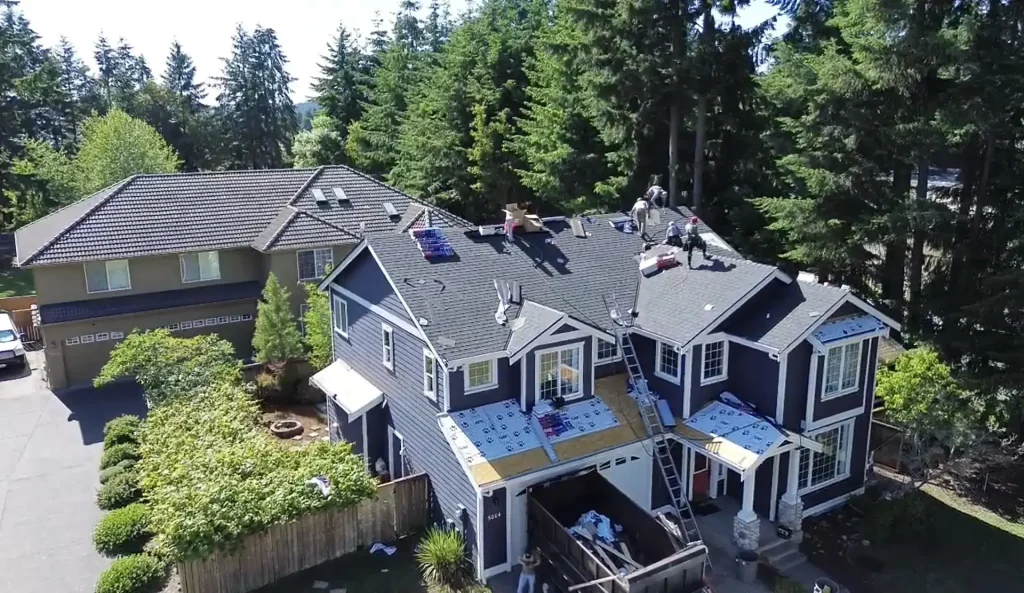
A single-ply roof is only as good as the installation behind it, and we treat every step with precision. Here is how we approach a PVC or TPO project from start to finish:
- Inspection and assessment: We examine the existing roof, deck condition, drainage, and any problem areas before recommending a system.
- Deck preparation: We remove old material as needed, repair or replace damaged decking, and make sure the surface is clean, dry, and structurally sound.
- Insulation and substrate: We install the appropriate insulation and cover board to meet energy requirements and provide a stable base for the membrane.
- Membrane installation: We roll out the PVC or TPO sheets and mechanically fasten or fully adhere them according to the system design.
- Heat welding: We weld every seam with calibrated hot-air equipment, then probe each seam to confirm a complete bond.
- Flashing and detailing: We seal all penetrations, edges, curbs, and transitions — the areas where most leaks begin.
- Final inspection and cleanup: We verify the entire roof, confirm proper drainage, and leave the site clean.
Throughout the project we keep you informed, because strong communication is part of how we work. We handle both standard and complex jobs, including full replacements, skylight installations, gutter systems, and storm damage repairs on membrane roofs.
Credentials, Warranties, and Our Commitment
Royal Bear Roofing is a licensed, insured, and GAF-certified roofing contractor. That certification matters because manufacturer-backed warranties require correct installation by qualified crews. On our PVC and TPO work, we offer 15-year workmanship warranties and up to 50-year product warranties backed by the manufacturer. This combination protects both the material and the labor behind it.
We are locally owned and operated, and we approach every project with honesty and transparency. We are known for fast, clean, high-quality work with careful attention to detail. Whether you own a home with a flat section or a light commercial building that needs a durable low-slope solution, we treat every roof like it is protecting our own family. That is the standard we hold on every job, and it is why property owners across the region trust Royal Bear Roofing for their PVC and TPO roofing needs.